
Craft show season brings opportunities to meet customers in person, test wreath designs, and make sales that go beyond your website or social media. But a successful show takes more planning than packing a vehicle with finished wreaths. How you choose your inventory, price your work, display it, and prepare for checkout can affect whether the day is enjoyable and profitable.
These practical craft show tips for wreath sellers walk you through preparing for a fall festival, holiday market, school fundraiser, or local makers fair. You do not need a huge booth or an enormous inventory. You need a clear plan, a display shoppers can understand, and good records to improve your next event.
Quick Answer: To prepare for a craft show as a wreath seller, check the event rules and audience, choose a focused mix of wreaths, calculate prices that cover materials and labor as well as show expenses, design an easy-to-shop booth, test payment methods, pack display and repair supplies, promote the event, and review sales and costs afterward.
Table of Contents
Start With the Event, Not the Inventory
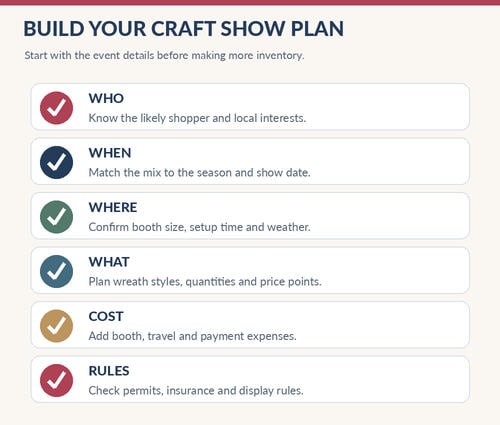
Before making another wreath, research the event. A busy fall festival, a school fundraiser, and an upscale indoor holiday market may attract shoppers with very different budgets and interests. Ask the organizer for practical details rather than guessing.
- Audience: Is the show geared toward families, sports fans, holiday shoppers, or general handmade gifts?
- Space and setup: Confirm booth dimensions, access hours, indoor or outdoor placement, and electrical availability.
- Rules: Ask about tents, weights, signage, allowed merchandise, insurance, permits, and sales tax requirements.
- Cost: Include the booth fee, travel, parking, packaging, payment fees, and any rental displays.
- Competition and traffic: Ask how the show is promoted and whether similar vendors are attending.
Vendor requirements vary by event and jurisdiction. Check local rules and the SBA business licenses and permits guide rather than assuming every event has the same requirements.
Choose a Wreath Inventory Mix That Fits the Season
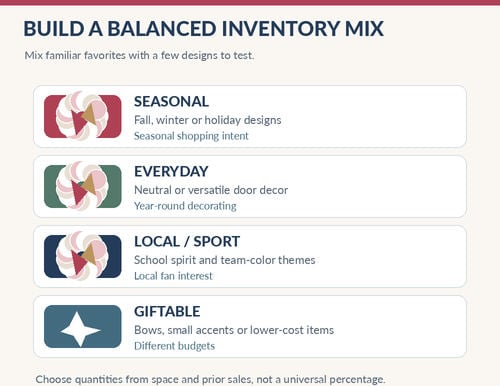
A full-looking booth does not necessarily need dozens of identical pieces. Start with designs your customers have purchased or requested before, add seasonal choices, and leave some room for new ideas. For fall events, those may include school colors, generic football themes, autumn florals, and everyday door decor. For holiday shows, shoppers may be looking for winter wreaths and giftable pieces.
Think about variety in three ways: theme, size, and price point. A shopper who admires a large premium wreath may still purchase a smaller bow or accent if you carry them. If you do not normally sell smaller items, do not add them just to fill space.
Not sure about quantity? See how many wreaths to bring to a craft show. Let booth space, transport capacity, and past sales guide the number; no universal quantity guarantees success.
Before buying more materials, inventory the wreath supplies you already own. Consider coordinating ribbon, signs, and picks and sprays for fresh color combinations without creating unnecessary leftover stock.
Price Every Wreath Before Show Day
Craft show shoppers should be able to read a price without asking. Calculate that price at home, print or attach a tag, and make sure your checkout records match the tag. Your normal price still needs to account for materials, your time, operating costs, and profit. A show adds its own costs, including booth fees, travel, and card processing.
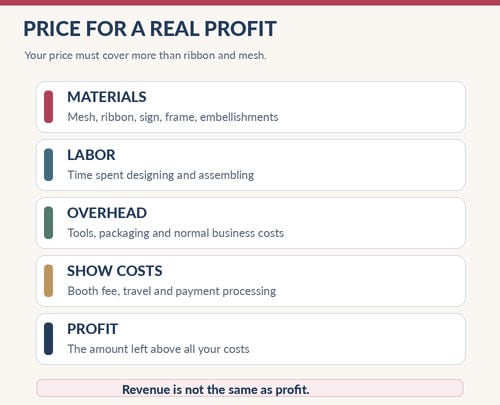
For example, if an event costs $160 in fees and travel and you sell eight wreaths, the event cost averages $20 per wreath sold—before material costs, labor, packaging, or payment processing. This is only an illustration; your actual per-wreath share depends on the number of items sold and the total event cost.
Have a consistent answer ready if someone asks for a discount. You can offer a planned multi-item promotion or simply explain that prices reflect handmade materials and labor. Do not negotiate so far that you lose money. For more detail, see our craft show pricing strategy and wreath pricing for profit guide.
Design a Booth That Makes Wreaths Easy to Shop
Wreaths are large visual products, so hanging them upright is usually much more effective than stacking them flat. Grid walls, properly weighted racks, approved tent walls, and stable folding displays can help shoppers see the entire wreath from the aisle. Show your strongest designs at eye level, with enough space that they do not hide each other.
Group wreaths by theme or season. Make prices readable, give customers room to move, and place the checkout area where it does not block your best display. Stand in the aisle and check whether a passerby can tell what you sell in a few seconds.
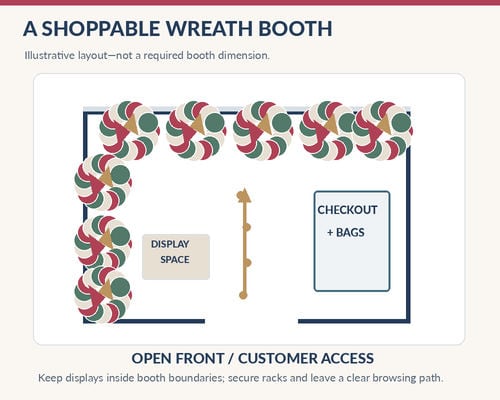
Outdoor sellers need to follow the organizer’s tent and anchoring rules, and displays must be stable in wind. Never sacrifice safety to fit in a few more wreaths. See our craft show booth display ideas for more options.
Make It Easy for Customers to Pay
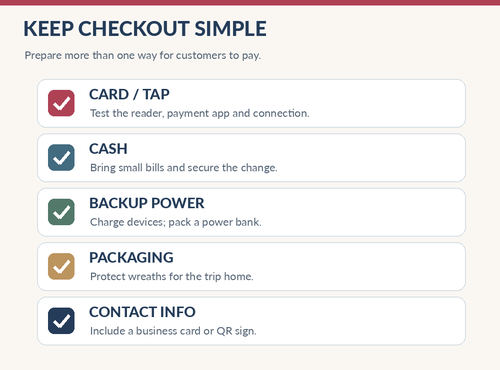
A customer who is ready to buy should not have to wait while you troubleshoot a card reader or find a bag. Test your payment reader and app before the event. Charge your phone or tablet, bring backup power, and pack cash change even if you expect most transactions to be electronic.
If you accept payment apps, know how you will verify that payments were received. Use clear business pricing, and keep records of each sale. Wreaths can be bulky, so plan safe ways for customers to carry them to their cars. Pack care cards and a way for customers to find your business later.
Promote Your Craft Show Booth Before the Event
Do not rely entirely on the event organizer to attract shoppers. Share the event name, exact location, hours, and booth number on your Facebook or Instagram page. Include photos of a few wreaths you plan to bring, and explain which colors or themes will be available.
A message such as “Find our handmade fall and school-spirit wreaths at the Main Street Fall Market this Saturday, 10–4, Booth 24” gives people much more useful information than “Come see us!” Only publish a booth number or event detail after it is confirmed.
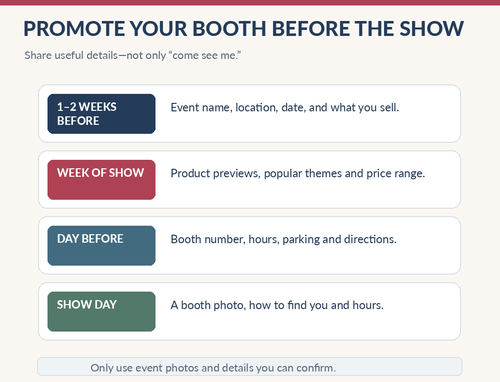
Encourage previous local customers to visit, but avoid promising inventory will be there if a piece might sell before the event. If you take custom orders, decide what deposits, timelines, and contact information you need in advance.
Pack a Craft Show Survival Kit
Make a categorized packing list and pack a day or two before the event. Keep a permanent tote for scissors, zip ties, wire, tape, pens, spare tags, and other supplies you use at every market. This can reduce last-minute shopping and forgotten items.
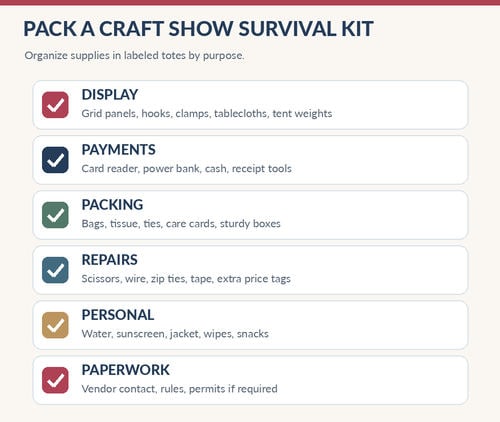
Bring vendor confirmation and any required permits or insurance documents. For a detailed list, see the craft show checklist for wreath sellers.
Set Up and Prepare Before the Doors Open
- Inspect the booth space and identify safe placement for racks, tables, and the checkout station.
- Set up the tent, approved weights, racks, hooks, tablecloths, and signs before unpacking wreaths.
- Hang wreaths upright, organize themes, and check price tags.
- Set up payment supplies and packaging, then test the reader and any QR links.
- Step into the aisle to review visibility, clutter, and customer flow.
- Photograph the finished display before shoppers arrive.
Use the craft show setup checklist for a more detailed event-day sequence. If the organizer specifies different unloading or safety procedures, follow those instead.
Track Sales, Questions and What Customers Actually Want
As the day progresses, write down each sale, item style, selling price, and payment method. Also note questions you hear repeatedly. Are people looking for school colors, smaller designs, ready-to-gift pieces, or custom orders? Those requests can be as valuable as sales when planning the next market.
After packing up, record remaining inventory, booth costs, total revenue, transaction fees, and any follow-up leads. A busy show is not automatically a profitable show. Compare what you earned with what the event actually cost.
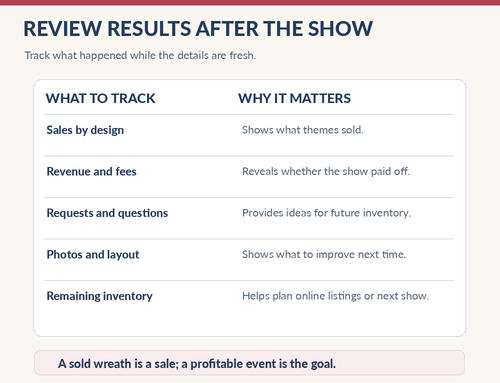
Our after craft show follow-up guide explains how to evaluate results, list unsold wreaths, and prepare for the next event. You may also want to review common craft show mistakes before booking another show.
Explore the Complete Craft Show Series
This guide is the starting point. Visit the complete craft show guide for wreath sellers for articles about display layouts, pricing, inventory planning, setup checklists, mistakes to avoid, and after-show follow-up. You can also browse the Craft Show Success collection for the whole series.
Final Thoughts
The best craft show preparation is not making the greatest possible number of wreaths. It is bringing a thoughtful assortment, pricing for profit, creating an approachable booth, checking your payment and packing supplies, and learning from every event. Start with a simple plan, improve it after each show, and focus on the details that make selling easier for you and shopping easier for your customers.
Craft Show FAQs for Wreath Sellers
How many wreaths should I bring to a craft show?
There is no single correct number. Consider booth dimensions, how many wreaths you can safely display and transport, expected attendance, and how many styles you want to offer. Start with a manageable assortment and adjust based on what you sell.
Should I offer discounts at a craft show?
Only if the promotion still leaves you with enough profit. Set prices ahead of time and decide whether you will offer a bundle promotion or planned special. Do not discount just because a shopper asks; your materials, labor, and event fees still need to be covered.
How should I display wreaths at a craft show?
Display wreaths upright on secure grid walls, racks, or stands when possible. Use several heights, group related styles, make price tags visible, and leave room for customers to browse. Follow all event rules for safe anchoring and booth boundaries.
What should a wreath seller pack for a craft show?
Pack finished wreaths, sturdy displays and hooks, clear price tags, payment tools and cash change, packing materials, business cards, simple repair tools, personal comfort supplies, and required vendor paperwork. A labeled tote for frequently used items can make setup faster.
What should I do after a craft show?
Review sales and costs, update inventory, record what customers requested, photograph remaining items, follow up on legitimate custom-order inquiries, and decide whether the show was worth repeating. Keep notes while the details are fresh.