
Even an eye-catching wreath booth can have a disappointing craft show if customers cannot see your designs, understand your prices, pay easily or carry their purchase home. The problem is not always your wreaths. Sometimes a few overlooked details get in the way of a sale.
This guide covers the craft show mistakes wreath sellers should avoid, with simple fixes for pricing, inventory, booth displays, checkout, outdoor events and customer follow-up. The same principles work for fall festivals, holiday markets and smaller community shows.
Quick Answer: Avoid underpricing handmade wreaths, overcrowding your display, hiding prices, relying on only one payment option, forgetting packaging and repairs, and failing to record results afterward. Plan a profitable price before the show, make every wreath easy to see and buy, and keep good notes for the next event.
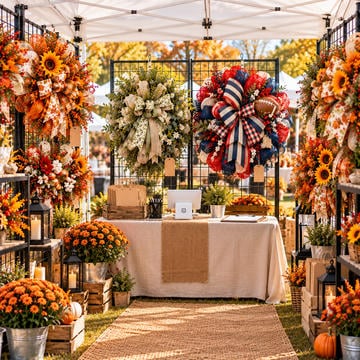
If you are still getting ready, start with our Craft Show Success series and the wreath seller packing checklist. This article focuses on the problems to catch before they cost you time, money or customers.
Table of Contents
The Most Common Craft Show Mistakes at a Glance
The simplest way to improve is to replace each mistake with one repeatable habit. Pricing, display, checkout and follow-up deserve special attention because they affect what you earn—not just how pretty the booth looks.
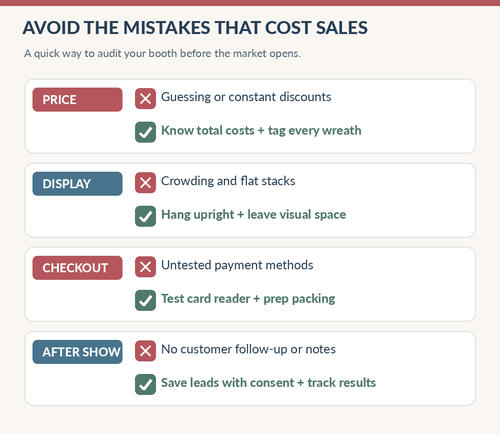
Mistake 1: Pricing Wreaths Without Knowing Your Costs
A price that covers ribbon, mesh and signs is not necessarily a profitable price. Wreath sellers also have labor, packaging, processing fees, event expenses and business overhead. If you give a discount without knowing your costs, a busy craft show can still leave very little profit.
- Calculate materials and labor for each design before tagging it.
- Allow for expected processing fees, bags and other per-sale costs.
- Treat booth fees, travel and similar event costs as expenses to recover over the show—not as though every wreath owes the full booth fee.
- Decide in advance whether any discounts are permitted and what price is still worthwhile.
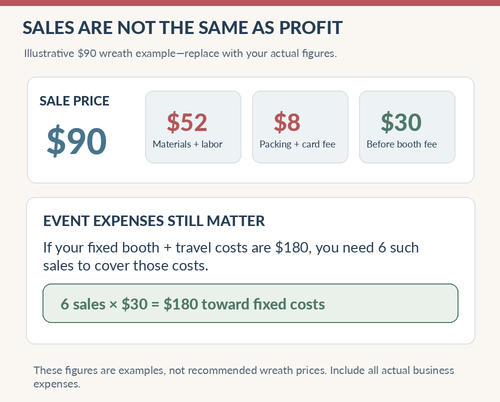
The example above is illustrative: a $90 wreath with $60 in per-sale costs contributes $30 toward fixed event expenses. If the booth and travel cost $180, six comparable sales cover only those fixed costs—not taxes or any other expenses you left out. Use your own figures rather than copying example prices.
For more detail, read Wreath Pricing for Profit and our craft show pricing strategy.
Mistake 2: Bringing the Wrong Mix of Wreath Inventory
Too few wreaths can make a booth look sparse. Too many can create a crowded wall of similar products and leave no safe place to store backups. The right amount depends on booth size, the event audience, your display capacity and prior sales—not a universal number.
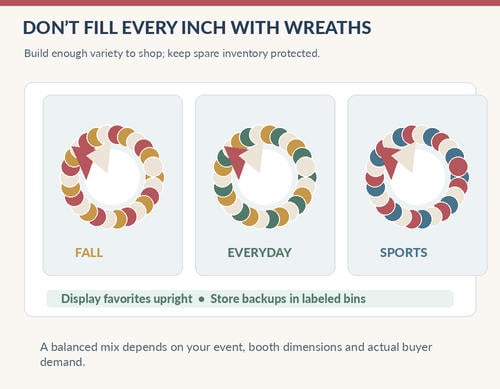
For fall shows, a mix of autumn colors, everyday styles, sports designs and upcoming holiday options may make sense, depending on the event. Consider a range of price points without making cheaper versions that lose money. Keep backup wreaths protected in marked bins and replenish your display as items sell.
Our companion guide on how many wreaths to bring to a craft show can help you plan inventory and backstock.
Mistake 3: Overcrowding the Booth or Stacking Wreaths Flat
A wreath shows its full shape best when displayed upright. Laying finished wreaths in piles, covering their bows or squeezing every display hook too close together makes it harder for shoppers to judge size and quality.
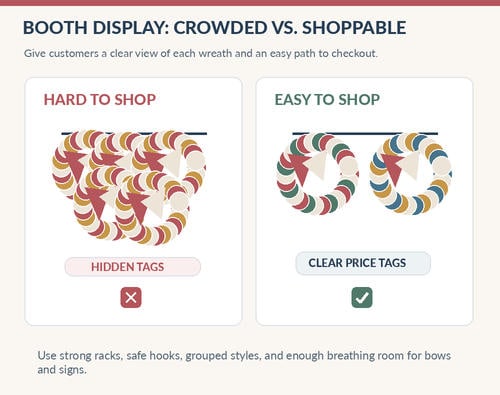
- Use secure grid walls, stands or hooks intended for the display weight.
- Group related themes without making every wreath look identical.
- Leave space around bows, signs and protruding florals.
- Keep the entrance and required aisle clear so shoppers can comfortably view the display.
A more inviting booth does not require expensive fixtures. See our craft show booth display ideas for layout and height tips.
Mistake 4: Forgetting Individual Price Tags and Shop Information
If every price requires a conversation, browsing can become uncomfortable. Shoppers should be able to see what an item costs and whether it meets their needs without having to interrupt you.
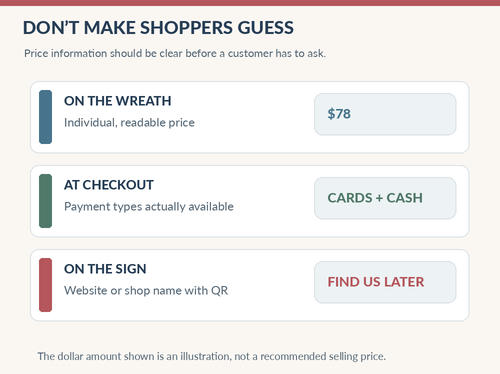
Attach a clearly readable price tag to each wreath, check that the tag does not hide artwork or a bow, and include material or care details when helpful. Keep your shop name visible. If you use a QR code, test it with a phone and make sure it leads to the intended page.
You can also provide a brief note about indoor or covered outdoor use when that is appropriate for the actual materials in the wreath. Avoid blanket promises that every design is weatherproof.
Mistake 5: Relying on a Payment Method That Has Not Been Tested
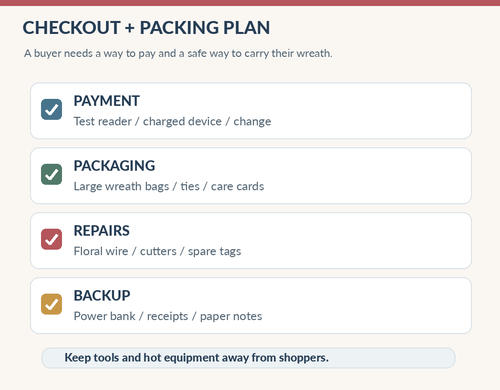
A customer who wants to buy should not have to wait while you troubleshoot a dead card reader. Cash is useful, but many buyers prefer cards. Test your device, app and internet connection at the venue rather than assuming they will work.
- Charge the phone or tablet and card reader, and bring a power bank.
- Prepare cash change in a secure pouch or box.
- Know which digital payment methods you can actually accept.
- Plan a provider-compliant backup for connectivity problems and know how you will record each sale.
If you accept a card, follow your payment processor’s security requirements; do not photograph or write down customers’ card details as a backup.
Mistake 6: Sending Customers Away Without Safe Packaging
A large wreath can be awkward to carry through a busy show or fit into a vehicle. If you have no large bags or protective materials ready, even a completed sale can end with bent ribbon, crushed mesh or loose accents.
Bring large enough protective wreath bags, ties, tape if appropriate, care cards and your business details. Ask whether the buyer needs any help understanding how to carry or store the piece, and avoid pressing delicate bows or signs into the bag.
Have your packaging within reach of checkout. Customers should not have to wait while you search through storage totes for a bag.
Mistake 7: Leaving a Repair Kit at Home
Transport can flatten a bow, shift a sign or loosen a lightweight ornament. A compact repair pouch with floral wire, chenille stems, cutters, zip ties, extra price tags and tape can save time when you need to tidy a display.
Do repairs in a protected work area, not where someone may bump a sharp tool or hot glue gun. Follow event rules for powered or heated equipment. Pack a few appropriate spare materials only if they are compatible with the wreaths you brought.
If you need to restock your workbench after the show, browse our wreath-making supplies.
Mistake 8: Ignoring Outdoor Weather and Display Safety
A lightweight wreath hanging high on a grid panel can become a problem when wind picks up. Rain, sun exposure and uneven ground create additional risks for fragile decorations and an unsecured canopy.
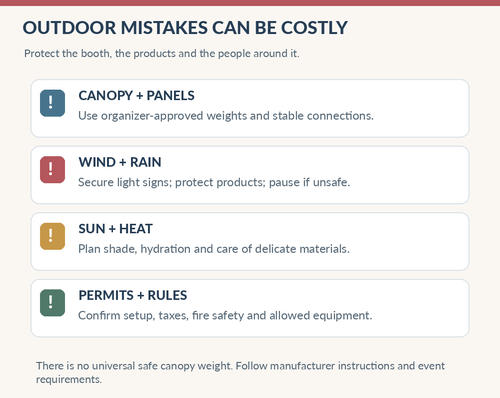
- Check forecast and event rules before loading the vehicle.
- Follow the canopy manufacturer’s and organizer’s anchoring or weighting requirements; no single weight is right for every setup.
- Secure free-standing racks and signs and inspect unstable or uneven placements.
- Protect finished wreaths from direct wet weather when their materials are not designed for it.
- Close, lower or dismantle unsafe displays when weather or event staff require it.
Do not fasten tall racks to nearby structures without permission or obstruct emergency or accessible paths.
Mistake 9: Waiting Until the Show to Think About Checkout and Customer Experience
A shopper may need a moment to compare two wreaths, ask whether a design can be customized or find the checkout table. Make that experience straightforward with clear categories, an approachable space and a defined handoff for sold wreaths.
If you offer custom orders, be ready to explain your deposit, timeline, delivery or pickup arrangements and what changes are possible. If you do not accept them, avoid encouraging requests you cannot fulfill. Make promised policies consistent with how your business actually operates.
Mistake 10: Forgetting Customers Who Want to Purchase Later
Many shoppers come to a craft fair for ideas, browse several booths or are not ready to carry home a wreath. Give interested people a simple path back to your business: a business card, clear website address or scannable link.
If you collect email addresses or order inquiries, tell people what they are signing up for and contact them only with appropriate consent. A small list of genuinely interested customers is better than collecting contacts you have no permission to message.
Mistake 11: Never Reviewing Whether the Show Was Profitable
The day after an event is the best time to capture what happened while details are fresh. Do not measure success only by total revenue or by how crowded the market looked.
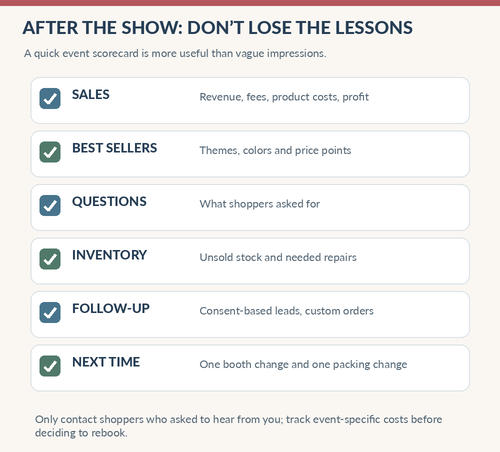
- Record sales, refunds, materials, payment fees and event expenses.
- Note best-selling themes, price points and customer requests.
- Update remaining stock before relisting items online.
- List damaged or repair-needed wreaths separately from sale-ready inventory.
- Decide which event features made the show worth repeating: quality of buyers, organization, costs and lead opportunities.
See our after-craft-show follow-up guide for a practical plan to turn what you learned into next season’s inventory and booth improvements.
Craft Show Mistakes: Final Thoughts
Most craft show mistakes are fixable. When you price for profit, display wreaths where buyers can see them, offer a dependable checkout, provide protective packaging and plan for weather, your booth becomes easier to run and easier to shop.
Keep a few notes from every event and make one or two meaningful improvements each time. For the full planning sequence, explore our Craft Show Success collection—from preparation and setup to pricing and post-show follow-up.
FAQs About Craft Show Mistakes
What is the biggest mistake wreath sellers make at craft shows?
Underpricing is a particularly costly mistake because selling more wreaths does not help if the price fails to cover materials, labor, transaction costs and a reasonable share of event expenses. Cluttered displays and missing prices can also make a booth harder to shop.
Should I put an individual price tag on every wreath?
Yes. Since finished wreaths often vary in size, materials and design, a clear individual price tag helps customers compare products without asking for every price. Check that the tag is visible but does not cover a bow or sign.
How many wreaths should I bring to a craft show?
Base your inventory on booth dimensions, event audience, transport capacity and past sales. Bring enough to make a welcoming upright display with appropriate variety, plus protected backups if space allows, rather than filling every inch of the booth.
How can I make a wreath craft show booth look less crowded?
Hang wreaths upright on secure racks, group related styles, space them so designs do not overlap, and keep bins and packaging out of shopper walkways. Use one or two focal wreaths instead of competing decorations in every corner.
Is accepting cash enough at a craft fair?
Cash can work for some shoppers, but card acceptance gives more people a convenient option. If you offer card payments, test the reader and connection beforehand and have a backup power source and provider-compliant contingency plan.
What should I bring for outdoor craft show weather?
Follow the event and canopy maker’s rules for weights or anchors, secure display racks and signs, and pack weather protection appropriate for your wreath materials. Check the forecast and have a plan to close or dismantle the display if conditions become unsafe.
How do I know whether a craft show was worth the booth fee?
Compare sales revenue with the costs of products sold, labor, transaction charges, booth fees, transport and other event expenses. Also record useful customer inquiries and repeat-business opportunities, but do not treat potential future sales as money already earned.
What should I do after a disappointing craft show?
Record what sold, what shoppers asked for, which prices and displays drew interest, and what the event cost. Fix one or two controllable problems before the next show, and consider whether the event attracts the type of customers who buy your wreaths.