
Starting a wreath making business can turn a creative skill into an opportunity to earn extra income, sell seasonally, or build a handmade brand. But selling wreaths successfully requires more than making attractive designs. You also need to understand your buyers, manage supplies, price your work, and decide where to sell.
The good news? You don’t need a huge studio or a closet full of ribbon before your first sale. Start small, test demand, and build around the designs that customers actually buy.
Quick Answer: To start a wreath making business, decide who you want to sell to, research your market, set a realistic budget, check local business and tax requirements, organize a workspace, create a small collection, price each wreath for profit, select your sales channels, and market your products with clear photographs. Track income and costs from the beginning so you can improve with every sale.
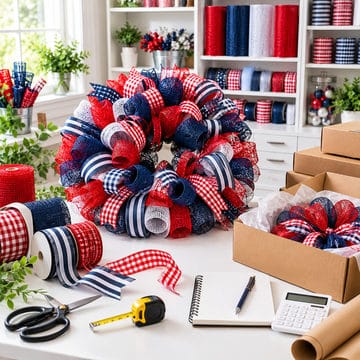

Table of Contents
Can You Make Money Selling Wreaths?
Yes, a wreath making business can earn money, but sales and profit are not the same thing. A wreath may sell quickly yet leave very little income if you underestimate the cost of supplies, packaging, selling fees, shipping, or your own time.
Before purchasing a large amount of inventory, think about three questions: Who will buy your wreaths? What price will they reasonably pay? How much must you spend to make and deliver each one?
Your results will depend on the style and quality of your products, local or online demand, how efficiently you use supplies, your sales channels, and the amount of unsold inventory you carry. Treat the first few sales as opportunities to test your assumptions, rather than proof that a particular design will always be profitable.

Step 1: Decide What Kind of Wreath Business You Want
Start by defining your customer and the kinds of wreaths you’re most excited—and equipped—to make. A clear starting focus makes supply buying, pricing, and marketing easier.
Popular directions include seasonal and holiday wreaths, sports and school-spirit wreaths, everyday home décor, personalized wreaths, teardrop swags, grapevine designs, and premium statement pieces. You might specialize in local team colors at craft shows or offer made-to-order wreaths through social media.
You do not have to choose one niche forever. You simply need a manageable first collection and a recognizable style. If your initial designs are sports-themed, explore sports wreath supplies and team wreath supplies to plan coordinated colors and materials.
Start with this exercise: Write one sentence that describes your ideal customer and your first collection, such as: “I make colorful, midpriced football and school-spirit wreaths for local fans and gift buyers.”

Step 2: Research Customers and Competitors
Before buying enough supplies for 20 wreaths, investigate what is already selling. Browse nearby craft shows, local boutiques, handmade marketplaces, social-media groups, and the websites of other wreath makers.
Take notes on popular sizes, designs, pricing, photo styles, shipping policies, personalization requests, and seasonal trends. Notice what customers praise or complain about in reviews. You are looking for gaps in the market, not designs to copy.
Ask yourself:
- Are customers buying smaller, affordable wreaths or larger statement pieces?
- Which local teams, schools, holidays, or colors create repeat demand?
- What price range seems realistic for the product you want to make?
- Can you offer a clearer style, better photographs, more useful product information, or an easier ordering experience?
Make a short list of three to five designs to test. Keep your options limited until real customer behavior tells you which ideas are worth expanding.
Test Demand Without Treating Listings As Sales Data
Seeing dozens of similar wreaths listed for sale can tell you that other people are offering them—but it does not establish how many actually sell. Reviews, favorites, views, and social-media comments can be helpful signals, but none is a guaranteed order or a reliable measure of another seller’s profit. Try a small, manageable product test before spending heavily on supplies.
A simple test: Select two or three distinctive designs for the same customer group. Estimate costs and prices, show clear photos, and list a small number that you can truly fulfill. Record inquiries, orders, final selling prices, materials used, packaging expense, time required, and customer feedback. Compare the results before you repeat or expand a design. Do not copy other sellers’ photographs, logos, or original artwork during research.
If you need help choosing a direction, our Is The Wreath Market Too Saturated To Start A Business? article explores niche selection and realistic demand testing.
Step 3: Create a Realistic Startup Budget
There is no universal startup amount for a wreath business. Some makers already own their tools and have a large ribbon collection; others must buy everything. Separate one-time startup expenses from the cost of making each wreath.
Your budget may need to cover frames, deco mesh, wired ribbon, signs, ornaments, picks, chenille stems, wire, glue, scissors, storage, photography supplies, packaging, marketplace charges, craft-show fees, and any applicable registration or permit costs.
Example: A $650 Trial Startup Budget
The following is an illustrative planning budget, not a quote or a typical industry cost. Your actual prices and requirements may be different.
| Expense | Example Amount |
|---|---|
| Materials for a small test collection | $280 |
| Basic tools and reusable supplies | $70 |
| Packaging and photo supplies | $80 |
| Selling/listing or market test | $90 |
| Business setup reserve | $80 |
| Contingency for unexpected costs | $50 |
| Illustrative total | $650 |

Reserve some money for packaging and replenishing popular supplies. Spending the full budget on mesh, ribbon, and ornaments leaves little flexibility when your first customer places an order.
Plan each wreath before you shop: decide its base, colors, focal sign, ribbon, finishing details, and estimated selling price. Visit wreath supplies or our wreath supplies for businesses page to compare the materials you actually need. You do not need to purchase full cases to start testing products.
Separate Your Startup Cash Budget From Your Cost Per Wreath
Your opening budget answers how much cash do I need to begin? Your product-cost calculation answers what must each wreath earn to be worthwhile? Keep these separate. Reusable tools and a first batch of supplies affect startup cash, while the ribbon, mesh, sign, labor, packaging, selling fees and seller-paid delivery for each finished wreath affect pricing decisions.
Keep a little room for unexpected purchases and imperfect first attempts. Do not assume that every purchased roll of ribbon is immediately consumed, or that the entire cost of reusable scissors belongs to the first wreath. Use a consistent way to account for materials and overhead so you can compare designs fairly.
Step 4: Check Business, Tax, and Local Requirements
The legal and tax steps depend on your state, county, city, business structure, and sales channels. There is no single nationwide license checklist that applies to every home-based wreath business.
Research business-name registration, local licenses, home-occupation or zoning rules, sales-tax collection, resale certificates, tax identification, business insurance, and craft-show vendor requirements where applicable.
The U.S. Small Business Administration’s startup guide is a helpful starting point; then verify requirements with your relevant state and local agencies. If you’re uncertain about tax treatment, ask a qualified professional. The IRS explains the difference between a hobby and a business, including why accurate business records matter.
Organize your paperwork early. A separate business account, receipt folder, inventory list, and simple bookkeeping spreadsheet can help you see how much you’re really spending. Track revenue, supplies, sales fees, refunds, shipping, and other expenses from day one.
Important for sports wreath sellers: Buying an officially licensed item for resale is not the same as having permission to manufacture new merchandise using protected team artwork. Confirm that you are using designs, photos, logos, and other materials in ways you are permitted to use them.
Recordkeeping, Sales Tax And Insurance Deserve Early Attention
Save receipts, invoices, sales records, mileage or event expenses when applicable, and records of business-use purchases from the beginning. A simple spreadsheet may be enough for the first few orders, as long as it clearly identifies income and expenses and retains supporting documents. The IRS’s recordkeeping resources explain why those records matter for tax reporting and business decisions.
Depending on where and how you operate, you may need to look into sales-tax registration and collection, home-business restrictions, insurance, event requirements, and permits. Do not assume a home-based business is exempt, and do not assume that every state requires the same licenses. The Small Business Administration’s startup guidance is a starting point; verify rules with the agencies responsible for your own location and selling methods.
Step 5: Set Up an Organized Workspace
You do not need a dedicated commercial studio. A spare room, worktable, or organized area of your home can be enough for a small initial collection—subject to any applicable local requirements.
Ideally, create separate places to:
- Design and assemble: Keep your scissors, glue gun, wire, ties, and measuring tape within reach.
- Store supplies: Group ribbon, mesh, frames, and decorations by type, theme, or color.
- Protect finished wreaths: Hang or store completed products where they will not be crushed.
- Photograph: Use clean backgrounds and consistent lighting.
- Pack orders: Keep boxes, tape, labels, protective materials, and a scale together.
An organized workspace reduces repeated purchases and helps you track the materials used in each wreath. It also makes restocking much easier when a design starts selling.
Step 6: Create a Small, Focused Collection
Resist the urge to offer every holiday, every team, and every possible style at launch. Start with a small test collection that shows your design aesthetic and includes a few price points.
A practical first collection might consist of three or four coordinating everyday or sports designs, one more elaborate statement piece, and one sample that shows the kind of custom work you accept. You can vary this approach based on your chosen selling channel.
Use some core materials across several wreaths. The same solid ribbon, coordinating mesh, and basic frame style may appear in different designs, helping reduce leftover scraps and complicated purchasing.
Plan quantities before ordering. If you’re unsure how much ribbon to purchase, use our How Much Ribbon Do You Need for a Wreath? guide. And if you’re new to construction, start with How to Make a Wreath.
Track each prototype: Record the materials consumed, the time it takes to complete, finished dimensions, and whether you’d be willing to reproduce that exact design at your intended selling price.

Step 7: Price Every Wreath for Profit
Your selling price must do more than replace the materials you used. It should account for labor, overhead, packaging, fees, and any shipping cost you absorb while leaving room for profit.
A simple planning equation is:
Selling price ? materials ? labor allowance ? allocated overhead ? packaging ? selling/processing fees ? seller-paid shipping = estimated amount remaining.
That final amount is not automatically your after-tax profit. Taxes, returns, advertising, and other costs may still affect the result.
Worked Example: A Wreath Sold for $150
| Item | Illustrative Amount |
|---|---|
| Customer selling price | $150 |
| Materials | ?$42 |
| Labor allowance (2 hours × $20) | ?$40 |
| Allocated overhead | ?$10 |
| Packaging | ?$6 |
| Selling and processing fees | ?$12 |
| Seller-paid shipping | ?$18 |
| Remaining after listed allowances | $22 |

This is why choosing a price only because a competitor charges it can be dangerous. Measure and weigh your packed wreath before offering free shipping, and account for shipping fees, oversized packaging, and any discounts you expect to offer.
For a deeper explanation of margins and selling prices, read How to Price Wreaths for Profit.
What The $150 Pricing Example Actually Tells You
In the worked example above, the $22 remaining is after an allowance for labor and the particular expenses listed. It is not the same as $22 of guaranteed take-home pay, and it is not automatically net business profit. Taxes, advertising, return losses, damaged goods, unsold supplies, and other real expenses may still need to be considered. Likewise, your labor allowance represents compensation for work; it should not disappear from the math simply because you are the owner.
If a price leaves too little room, test ways to reduce waste, change the design, improve production efficiency, or reach a buyer willing to pay for the finished work rather than assuming more volume will solve a low-margin product. For a deeper explanation of pricing, compare the calculations with our Wreath Pricing For Profit resource.

Step 8: Choose Where to Sell Your Wreaths
You can sell locally, online, or through a combination of channels. But when you’re starting, one or two well-managed channels are usually better than trying to maintain them all.
Local Sales
Craft shows, holiday markets, small boutiques, community events, local pickup, and word-of-mouth referrals allow buyers to see your designs in person. You may avoid shipping, but you must plan for booth fees, displays, travel, payment processing, setup time, and unsold inventory.
Our Craft Show Checklist for Wreath Sellers can help with your first event.
Online Sales
An online marketplace, your own website, or social-media sales can reach buyers farther away. However, you need accurate stock tracking, reliable product photos, clear descriptions, secure payment methods, and realistic packing and shipping policies.
Read How to Write Wreath Product Descriptions That Sell before building product listings.

Test A Real Packed Shipment Before Offering Free Or Flat-Rate Shipping
A finished wreath’s diameter is not the same as the shipping carton dimensions. Put a sample wreath into the protective packaging you actually intend to use, then weigh and measure the sealed package. Price a shipment to representative destinations and remember that oversized packages can cost more than their weight suggests. Decide how you will handle damage, delivery questions, and local pickup before your first order.
For online orders, promised ship dates matter. The FTC’s Mail, Internet, or Telephone Order Merchandise Rule guide explains that sellers generally need a reasonable basis for shipping within the advertised period (or within 30 days if none is stated), and must follow the rule’s delay-consent or refund procedures when they cannot ship on time. Avoid promising quick shipping until you know your real production and packing capacity.
Step 9: Photograph, Market, and Improve Your Products
A handmade wreath needs photographs that show what the buyer will actually receive. Include a clear front view, a side angle showing depth, close-ups of ribbon and embellishments, and an image that communicates scale. Use consistent lighting and a clean background.
A product description should state the finished size, colors, materials, hanging recommendations, processing time, customization options, and shipping or local pickup details. Avoid implying that a photographed accessory or decorative element is included if it isn’t.
For marketing, show more than a sale announcement. Share finished products, the design process, product close-ups, booth setups, packaging, customer reviews (with permission), and upcoming seasonal releases.
After each sale, write down what sold, how much you received, what it cost, where the customer came from, and what questions they asked. This turns your first few orders into valuable information for future buying and design decisions.
Make A Simple Sales Scorecard For Each Design
After you launch, track more than total sales. For each design, record price received, material cost, hands-on time, packaging and shipping paid by you, selling fees, customer source, and whether you would make it again. Record returns and unsold inventory too. This lets you compare what people actually purchase with what you enjoy creating and with what the business can afford to produce.
Review the scorecard monthly. A design with plenty of attention but no orders may need different photographs, a clearer audience, or better pricing. A wreath that sells quickly but takes too many hours to assemble may need redesigning. Keep the changes small enough that you can tell which adjustment helped.
Essential Supplies for a Wreath Making Business
| Supply Category | Common Starting Items | Why You Need It |
|---|---|---|
| Bases | Wire frames, grapevine bases, or forms | Determines the wreath’s structure and size |
| Main materials | Deco mesh, greenery, or other body materials | Creates fullness and shape |
| Ribbon | Wired solids and selected patterns | Bows, accents, and color coordination |
| Focal details | Signs, ornaments, picks, attachments | Gives each design its theme |
| Assembly | Chenille stems, floral wire, zip ties, glue | Secures components |
| Finishing | Scissors, cutters, ruler, tags | Clean construction and presentation |
| Sales and delivery | Photo backdrop, labels, boxes, packing material | Helps you list and deliver products |
You can find many of these items in our wreath supplies collection. Purchase for planned designs rather than stocking every appealing color and pattern at once.
Common Mistakes When Starting a Wreath Business
Buying too much inventory. Test the demand for a few designs before filling shelves with materials for every holiday and occasion.
Underpricing your work. Include your time and all selling costs instead of treating labor as free.
Offering unlimited customization. Set clear options, prices, turnaround times, and deposit policies before accepting special orders.
Ignoring shipping. The packed box—not just the wreath—determines delivery costs. Check dimensions, weight, and destination before promising a shipping rate.
Making wreaths without a defined buyer. Attractive does not automatically mean marketable. Know who the design is for and why they would choose it.
Using weak photographs. Dark photos, cluttered backgrounds, and missing scale information create hesitation in online shoppers.
Failing to track expenses. Ribbon, wire, glue, damaged supplies, event fees, and small purchases add up.
Growing too quickly. More sales channels and product choices can create more administrative work before the business is ready.

A Simple 30-Day Wreath Business Launch Plan
This is a suggested project schedule—not a deadline or guarantee of sales.

- Week 1 — Plan: Define your customer, research competitors, choose your first designs, and outline a budget.
- Week 2 — Prepare: Verify local requirements, organize the workspace, purchase focused supplies, and record costs.
- Week 3 — Create: Make sample wreaths, photograph them, calculate prices, and write product descriptions.
- Week 4 — Launch and learn: Publish listings or attend a small market, gather feedback, and review the results before restocking.
If you’re balancing this with another job or family obligations, move at a pace that allows you to make products carefully and handle orders reliably.
How to Grow a Wreath Making Business
Growth doesn’t have to mean making more wreaths. It may mean earning more per wreath, improving photographs, developing a recognizable style, or reducing waste.
When you have enough sales data, compare products by demand and profitability. Repeat designs that consistently sell and are manageable to make. Keep a realistic seasonal calendar, document your most-used materials, collect reviews, and consider an email list for repeat buyers.
Use our Wreath Maker Resource Center for additional help with pricing, supplies, craft shows, marketing, and product photography.
Final Thoughts
Learning how to start a wreath making business is less about launching with everything perfect and more about making thoughtful decisions. Choose a clear customer, test a focused collection, calculate the actual costs of selling, and improve from what real buyers tell you.
A small business with carefully chosen supplies, clear product photos, dependable customer service, and realistic pricing is in a much stronger position than one built around a large inventory without a plan.
How to Start a Wreath Making Business: FAQs
How much does it cost to start a wreath making business?
There is no fixed amount. Create a budget based on the tools you already own, your first designs, selling channel, and required business expenses. The $650 example in this guide is illustrative, not a minimum or an industry standard.
Do I need a business license to sell handmade wreaths?
You may need registration, licenses, permits, or other approvals depending on your location and sales channel. Check with the relevant state, city, county, and event organizers before selling.
How many wreaths should I make before I start selling?
Start with enough to show your style and test demand, rather than building a large collection before you have any feedback. Custom-order sellers may begin with samples, while event sellers will need inventory appropriate to the event.
Where can I sell handmade wreaths?
Common choices include craft shows, local markets, boutiques, online marketplaces, your own website, social media, and local pickup. Compare fees, customer reach, shipping needs, and the time required to manage each channel.
How should I price a handmade wreath?
Count materials, a reasonable allowance for your work, overhead, packaging, selling fees, and any seller-paid shipping. Then set a price that leaves room for profit and is appropriate for the product and market.
Can I run a wreath business from home?
Many wreath businesses begin in a home workspace. Verify applicable home-occupation, zoning, tax, insurance, and other requirements, and make sure you can safely store and ship finished wreaths.
Should I offer custom wreaths?
Custom work can be worthwhile when you set clear design choices, pricing, deposits, and turnaround times. Avoid promising unlimited customization before you know how much time and extra inventory it requires.
How can I tell whether my first wreath sales are actually profitable?
Record the selling price and all costs for each wreath, including materials, a reasonable labor allowance, packaging, platform or payment fees, and any shipping you pay. Then review additional business costs such as advertising, damaged inventory, and taxes separately. A positive remainder on one order does not guarantee that the business as a whole is profitable.
Should I offer free shipping when I launch my wreath business?
Not automatically. Pack a sample wreath in the exact box and protective materials you plan to use, measure and weigh the sealed carton, and compare shipping quotes for realistic destinations. Decide whether shipping is charged separately or included in the price only after you understand the cost and how it affects your margin.