
Deco mesh is one of the most versatile materials in wreath making, but you do not have to use it the same way in every project. Different folding, gathering, and rolling techniques create dramatically different looks—even when you start with the same colors.
If you have been wondering how to use deco mesh in a wreath, this guide compares five popular methods: poofs, ruffles, curls, combinations, and twisted spirals. You’ll learn how each one works, what kind of finish it creates, and how to choose a technique for your next design.
Quick Answer: Use the poof method for a full, rounded base; ruffles for soft, wavy texture; curls for defined loops; combination techniques for extra dimension; and twisted spirals for decorative accents. The right choice depends on your mesh width, wreath frame, and desired style.
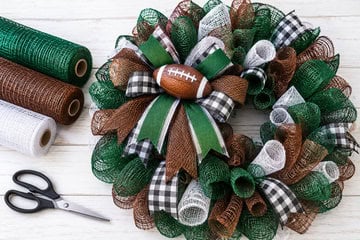
Table of Contents
Five Ways to Use Deco Mesh: Quick Comparison
Start with the appearance you want, then choose the construction method. All five techniques can work for seasonal wreaths, sports wreaths, and everyday decorating.
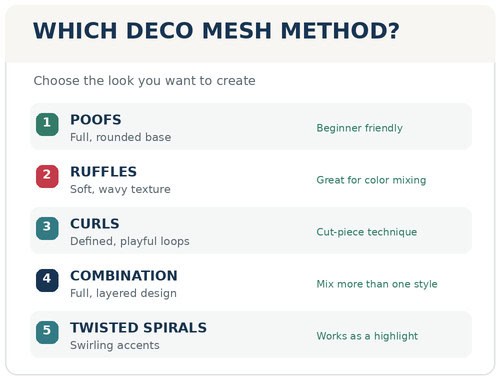
| Method | Appearance | Common Starting Material |
|---|---|---|
| Poofs | Rounded and fluffy | Continuous 21″-wide mesh roll |
| Ruffles | Wavy and layered | 10″-wide cut pieces |
| Curls | Structured, tube-like loops | 10″-wide cut pieces |
| Combination | Mixed textures and extra fullness | Continuous roll plus cut accents |
| Twisted spirals | Swirling, decorative details | Longer cut pieces |
These are starting points, not fixed requirements. Some makers use 10-inch mesh for poofs or different widths for ruffles. The technique and the stiffness of the mesh matter as much as the listed width.
Supplies for Making a Deco Mesh Wreath
- Wire wreath frame or work wreath with attachment ties
- Deco mesh in coordinated colors
- Chenille stems, pipe cleaners, or built-in frame ties
- Measuring tape or ruler and sharp scissors
- Optional wired ribbon, signs, picks, or ornaments
For a sports design, select team-color mesh and use a sign, bow, or football ornament as the focal point. Your mesh technique supplies the background texture.
1. Poof Method: The Full and Fluffy Wreath
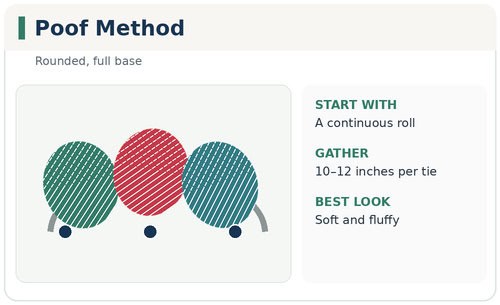
The poof method uses a continuous length of mesh gathered into soft loops between attachment points. It’s a good starting technique for beginners and produces a rounded, full wreath base.
How to Make Deco Mesh Poofs
- Fasten the beginning of the mesh roll to a tie on your wreath frame.
- Measure roughly 10–12 inches of mesh along the roll to the next attachment point.
- Gather the mesh at that point and twist the tie around it securely.
- Continue around the frame, keeping the poofs reasonably consistent.
- Fluff the loops after finishing the base, then add ribbon and decorative attachments.
Best for: Wreaths with a soft, full background that supports a prominent sign or large bow. A 21-inch-wide mesh roll is a common choice for this style.
Tip: Measure the mesh along its length before gathering. If your poofs are too long, they may collapse into one another; if they’re too short, the frame may show through.
2. Ruffle Method: Soft, Wavy Texture

Ruffles are made by scrunching individual pieces of mesh from one end to the other. The resulting shape has two airy, open edges and a pinched center, creating movement around the wreath.
How to Make Deco Mesh Ruffles
- Cut 10-inch-wide deco mesh into pieces about 10 inches long.
- Lay one piece flat and scrunch it down the center, moving from one cut edge toward the other.
- Pinch the gathered center and secure it with a frame tie.
- Repeat at your remaining attachment points, adding more pieces if you want extra fullness.
- Arrange and fluff the edges to make the ruffles look evenly distributed.
Best for: Colorful wreaths with soft folds and an airy, layered appearance. Alternate two coordinating mesh colors for a balanced design.
Tip: Cutting mesh can produce some fraying. Handle the cut edges gently, use sharp tools, and avoid repeatedly pulling at loose strands. See our guide on how to keep deco mesh from fraying for additional techniques.
3. Curl Method: Playful, Defined Mesh Loops

The curl method transforms cut strips of mesh into small rolled tubes. Unlike ruffles, curls keep a more defined shape and can create a cheerful, highly textured wreath.
How to Make Deco Mesh Curls
- Cut 10-inch-wide mesh into strips roughly 10 inches long.
- Roll each strip inward into a loose tube or curl.
- Gather two or three curls at their centers, adjusting so the openings face outward.
- Secure the bundle tightly at one attachment point on the frame.
- Repeat around the wreath and rotate the curls to fill visible gaps.
Best for: Bright, fun wreaths featuring several mesh colors and a clearly defined curly texture. Use contrasting colors for more visual movement.
Tip: You can adjust the fullness by changing how many curls you group together. More cut pieces also mean more required yardage, so count your attachment points before cutting.
4. Combination Method: Layer Poofs, Ruffles, and Curls

You don’t have to pick just one mesh technique. Mixing poofs with ruffles or curls can create the extra volume seen in many elaborate football and team wreaths.
How to Combine Deco Mesh Techniques
- Make your base layer first, often using a continuous-roll poof method.
- Check where the frame looks sparse or where you want more color.
- Add contrasting ruffles or grouped curls at selected attachment points.
- Position your wreath sign and bow so the mesh doesn’t hide the design.
- Fluff and adjust the completed wreath, keeping the visual weight balanced.
Best for: Fuller sports wreaths, statement wreaths, or designs with several coordinating colors.
Tip: More mesh is not always better. Leave room for your focal sign, ornaments, and other attachments rather than covering every open space.
5. Twisted Spiral Method: Swirling Mesh Accents

Longer mesh strips can be twisted and gathered into decorative spiral-like accents. This produces a different look from the shorter rolled tubes in the curl method.
How to Make Twisted Deco Mesh Accents
- Cut 10-inch-wide mesh into longer strips, approximately 20 inches, as a starting experiment.
- Gently twist the strip along its length without pulling the weave apart.
- Pinch or gather near the middle and fasten it to an attachment tie.
- Position the two ends so they swirl outward from the wreath.
- Repeat around selected areas, mixing in standard poofs or ruffles if desired.
Best for: Decorative accents and designs that benefit from a little extra movement. The exact shape will vary with the mesh’s stiffness, length, and how tightly you twist it.
Tip: Test one strip before cutting an entire roll; some mesh varieties hold a twist better than others.
Bonus: The Cruffle Method — A Useful Original Technique
The original article also explained cruffles, a practical variation worth keeping alongside the five illustrated methods above. A cruffle combines a ruffle’s wavy gathered center with rolled-in edges like a curl. This helps keep the exposed cut ends from sticking out while leaving the middle full.
How to Make Deco Mesh Cruffles
- Measure and cut one test piece before preparing all the remaining mesh.
- Roll one cut end inward several turns so the raw edge is concealed.
- Repeat with the opposite cut end, keeping both rolls controlled.
- Gather the open center into a soft ruffle without pulling the ends back out.
- Pinch and secure the center to a wreath-frame tie or attachment point.
- Fluff the wavy middle and arrange the rolled ends to create a balanced, repeated texture.
Choose a cruffle when you like the volume of ruffles but prefer the neater rolled finish of curls. Test the amount of rolling with your particular mesh before cutting a full roll, and alternate your wreath colors or ribbon bundles as the design requires. See How to Keep Deco Mesh From Fraying for more edge-handling tips.
How Much Deco Mesh Will You Need?
Unlike the continuous poof method, ruffles and curls require you to cut individual pieces. The amount you’ll need depends on the number of attachment points, pieces at each point, and cut length.

For example, if a wreath frame has 18 ties and you plan to add two 10-inch mesh pieces per tie, you’ll cut 36 pieces:
18 ties × 2 pieces × 10 inches = 360 inches = 10 yards.
That is the theoretical amount of mesh used in those cuts, before trimming, testing, or waste. Have additional mesh available rather than relying on an exact 10-yard roll with no spare material. If you use three curls per tie, the requirement increases.
For poofs, multiply the number of attachment intervals by the mesh length between ties, then allow extra for attaching the starting and ending sections. For more on planning wreath materials, read what supplies you need for a 24-inch deco mesh wreath.
Which Deco Mesh Technique Should Beginners Try First?
The poof method is often the easiest starting point because it uses one continuous roll and relatively few cuts. Ruffles are another approachable option if you enjoy mixing colors and don’t mind preparing individual strips.
If you’re completely new to wreath making, our step-by-step beginner’s guide explains basic supplies and frame preparation.
How to Choose Colors for a Sports Wreath
Start with two or three colors that match your team or theme. A neutral color such as white, black, cream, or natural burlap-look mesh can separate stronger colors and keep the wreath from feeling too busy. Add one bold wired ribbon pattern or an ornament for extra detail, then position the sign where it remains readable.
When you’re ready to try a new method, explore deco mesh for wreath making and wreath frames and forms.
Final Thoughts
The five ways to use deco mesh in a wreath each create a different effect. Poofs are rounded and full, ruffles are light and wavy, curls are structured and playful, combination designs mix textures, and twisted spirals add motion.
Start with the technique that suits your style, test a small section before cutting all your materials, and let the wreath’s colors and decorations guide the finished design.
Frequently Asked Questions About Deco Mesh Wreath Techniques
What is the easiest way to use deco mesh in a wreath?
The poof method is an easy starting point because you can work with a continuous mesh roll and fasten one section at a time to the wreath frame.
What is the difference between ruffles and curls?
Ruffles are scrunched from one end to the other, creating loose, wavy edges. Curls are rolled into tubes, creating more defined round loops.
Is 10-inch or 21-inch deco mesh better?
Neither is always better. Ten-inch-wide mesh is convenient for many ruffle and curl designs, while 21-inch-wide mesh is popular for large, full poofs. The best choice depends on your technique and wreath size.
Can you combine poofs and ruffles in one wreath?
Yes. Poofs can provide a full base while ruffles or curls add extra texture and color around selected attachment points.
How do you prevent deco mesh from fraying?
Use sharp cutting tools, avoid excessive handling of cut edges, and test your mesh before preparing all the strips. Most woven deco mesh can still fray somewhat when cut.
What is a cruffle in deco mesh wreath making?
A cruffle is a mesh piece with both cut edges rolled inward and the remaining center gathered into a ruffle. It creates wavy volume while helping conceal raw ends.