
Leftover wreath ribbon has a way of piling up after you finish a bow, trim ribbon tails, or decorate a game-day wreath. The good news is that even a short piece can add color and character to your next project.
You do not need an entire new roll to make a wreath accent, decorate a gift, or create a small ornament. The trick is to match the length, width, and construction of each scrap to a project it can actually handle.
Quick Answer: The best uses for leftover wreath ribbon include extra wreath tails, small bows, bow layers, gift wrapping, gift baskets, garlands, ornaments, floral arrangements, table settings, tags, and craft-show packaging. Sort pieces by usable length first, then group by color, width, and whether the ribbon has wired edges.

Table of Contents
Sort Your Leftover Wreath Ribbon First
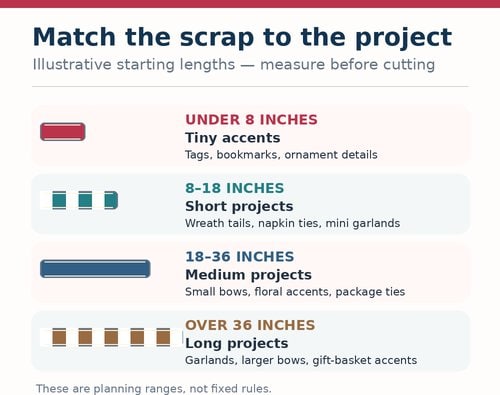
Before choosing a craft, measure your ribbon from end to end and trim away any visibly damaged section. These approximate ranges can help you decide where to start:
- Under 8 inches: gift tags, ornament details, small knots, and cards.
- 8–18 inches: wreath tails, tiny bows, napkin ties, and mini garlands.
- 18–36 inches: small bow layers, gift accents, and floral arrangements.
- Over 36 inches: longer bows, swags, garland accents, and larger packages.
These are project-planning suggestions, not fixed minimums. A wide, wired ribbon behaves differently from narrow, soft ribbon, and the finished design matters more than the category.
Wired ribbon holds curves and loops more easily; non-wired ribbon is often better for soft ties or flat paper crafts. See our guide to different ribbon types for more help choosing a material.
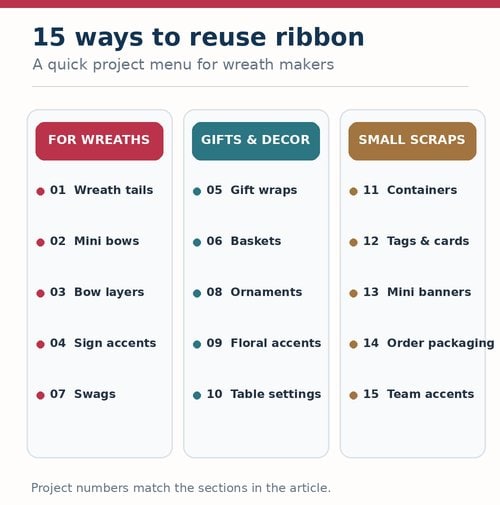
15 Uses for Leftover Wreath Ribbon
Choose one of these ideas based on the scraps you have. You can repeat the same team colors across several projects without matching every pattern perfectly.
1. Add Ribbon Tails to Another Wreath
Use leftover strips to repeat a color from your wreath sign or fill a thin spot near a bow. For a simple accent, try cutting two coordinating pieces about 12 inches long, crossing them in the middle, and securing the pinch point with a chenille stem or floral wire.
Fasten the accent to a sturdy frame or existing tie rather than only to loose mesh. Repeat the same colors in two or three spots for a planned, balanced look.

2. Make a Small Wreath Bow
You may not have enough ribbon for a dramatic multi-loop bow, but a short remainder can still make a small focal accent. Try one or two loops on each side with a shorter tail, or combine two complementary lengths.
Place it beside a wreath sign, on a small grapevine frame, or above a gift basket. For a detailed bow-making method, read How to Make a Bow for Your Sports Wreath.
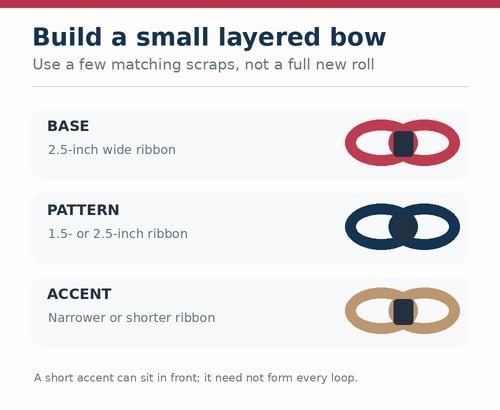
3. Add a New Layer to an Existing Bow
A small accent layer can freshen an existing wreath without replacing the entire bow. Choose a narrow patterned ribbon, two contrasting tails, or a small center loop and secure it to the existing bow center.
For a sports wreath, use a team color or simple check instead of introducing several unrelated patterns.
4. Fill Gaps Around a Wreath Sign
Short loops can soften an empty corner near a metal sign and connect it visually to the surrounding mesh. Position the scraps before fastening them so the sign stays readable.
Keep ribbon off important artwork and verify the sign itself is securely attached to the frame; ribbon should not carry its weight.
5. Decorate Gift Packages
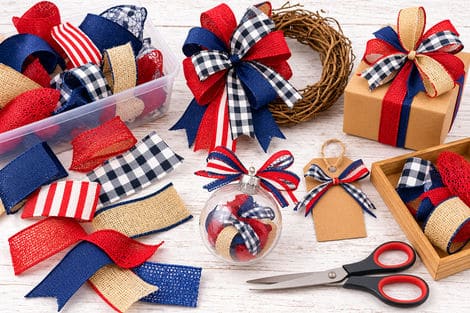
A few coordinating scraps make a kraft gift box look intentional. Cross two strips over a package, tie a short bow at the top, or use a narrow piece to attach a handwritten gift tag.
Wired ribbon creates structured loops, while non-wired ribbon works nicely for flatter ties.
6. Finish a Gift Basket
Dress the basket handle with a small bow or use matching scraps to tie a gift card to the wrapping. Pair two team colors with a neutral so the basket coordinates without becoming too busy.
Cover sharp wire ends and keep decorative ribbon from directly touching food.
7. Decorate a Garland or Teardrop Swag
Save medium and long pieces for scattered loops and tails along a garland, swag, or mantel arrangement. Repeat each important color at several intervals instead of adding a single isolated scrap.
A few small bows can add dimension even when you do not have enough ribbon to wrap the entire garland.
8. Make Holiday or Team-Color Ornaments
Fill a clear ornament with loosely curled ribbon scraps, tie a tiny bow below the cap, or use a narrow strip as an ornament hanger.
Trim exposed wire neatly. Do not overfill a transparent ornament if you want individual colors and textures to show.
9. Add Ribbon to Floral Arrangements
Wrap a small floral container in ribbon, attach a bow to a faux-flower bundle, or use narrow tails beneath a cluster of greenery.
A few repeated colors will connect a floral arrangement to a nearby wreath. Browse our picks and sprays for complementary accents.
10. Create Napkin Ties and Table Accents
Use medium strips as napkin ties, vase accents, place-card loops, or small decorative chair bows for a party or game-day table.
Choose a repeated color combination, and keep ribbons away from candles, hot serving dishes, and food-contact surfaces.
11. Decorate Mason Jars and Containers
A strip around a mason jar can dress up a pencil holder, flower vase, or craft-supply container. Layer a narrow patterned scrap over a plain, wider strip for contrast.
Secure it with removable tape or a tidy knot so the container can be reused.
12. Make Gift Tags, Cards, and Bookmarks
Very short ribbons are useful as loops through gift tags, flat accents on greeting cards, or decorative bookmark tabs.
For paper projects, non-wired ribbon is usually easier to glue flat. Remove wire only when it can be done neatly and safely.
13. Create Mini Banners and Ribbon Garlands
Tie strips onto twine or a thin cord for a small banner, party backdrop, or craft-show display. Use one or two featured patterns with coordinating solid colors.
Trim tails to similar lengths for a consistent finished edge, and check that each knot holds.

14. Add a Finishing Touch to Craft-Show Packaging
Use a short ribbon to attach a care card, identify a custom order, or tie a thank-you tag to a package. It adds a handmade detail without using a large amount of supply inventory.
Keep the finished ribbon flat enough to pack and ship efficiently.
15. Make Team-Color and School-Spirit Accents
Keep school-color scraps together for graduation decorations, game-day gift baskets, smaller bows, ornament clusters, and sports wreath accents.
Choose two dominant team colors and one neutral when the design needs visual separation. Browse team wreath supplies for coordinating materials.
How to Combine Ribbon Scraps Without a Busy Look
Use one dominant color, add a contrasting neutral, and limit the most noticeable patterns to one or two. Wider ribbon can form the back of a bow or banner; narrower pieces create accents. If the ribbon is stiff or wired, use it where the project needs a defined shape.
For wreaths, repeat the same material in more than one location. For gifts, let a single layered bow or tag be the focal point.
How to Store Leftover Ribbon So You Actually Reuse It
- Long lengths: roll them loosely around cardboard or an empty spool.
- Medium pieces: sort by color, sport, holiday, and ribbon width.
- Short pieces: keep in small labeled containers or clear bags.
- Damaged pieces: discard ribbon that is stained, excessively frayed, or too crushed to reshape.
Before opening a new spool, check your leftover container. It may already have the exact color or pattern your next wreath needs.
Plan Your Next Wreath to Reduce Ribbon Waste
Count your ribbon attachment points and test one bundle before cutting the rest. For example, if you need two 12-inch ribbon strips at 18 wreath ties, you need 36 strips, or 12 yards of ribbon for those accent pieces alone. The large finishing bow requires additional ribbon.
See How Much Ribbon Do You Need for a Wreath? for step-by-step yardage planning, including bows and tails.
Final Thoughts
Leftover ribbon is useful when you save it with a specific purpose in mind. Longer strips can become bows and garland accents, medium pieces work for wreath tails and gift packaging, and the tiniest usable scraps can brighten tags and ornaments.
Sort what you have, reuse pieces that suit the next project, and discard scraps that only take up space. A well-organized leftover ribbon bin can save materials and make future wreath projects easier.
Leftover Wreath Ribbon FAQs
Can I use very short scraps of wired ribbon?
Yes. Very short pieces can be used for tiny accents, ornaments, tags, or a small decorative knot. Save only what fits your regular projects.
How long should ribbon tails be on a wreath?
Many wreath makers start with strips around 12–14 inches long for small or medium accent tails, but the finished wreath size and design determine the best length.
Can I mix wired and non-wired ribbon?
Yes. Use wired ribbon when you need loops and dimension; softer non-wired ribbon works well for flat accents and ties.
How should I store leftover ribbon?
Roll longer ribbon loosely and sort shorter pieces by color, width, and theme in labeled bins or bags.
Should I keep every tiny piece of ribbon?
No. Discard damaged, frayed, or impractically short pieces unless you already have a specific project in mind.