
Choosing a wreath is easier when you separate three decisions: the base that supports it, the shape it makes, and the materials that decorate it. Understanding wreath bases and shapes helps you create a design that fits your door, works with your supplies, and looks the way you imagined.
That distinction matters because wreath-making terms often get mixed together. A grapevine wreath describes a natural woven base, a teardrop wreath describes a long tapered outline, and deco mesh describes a decorating material. They are not three competing styles. You can use mesh on a round wire frame, greenery on a teardrop base, or ribbons and football accents on grapevine.
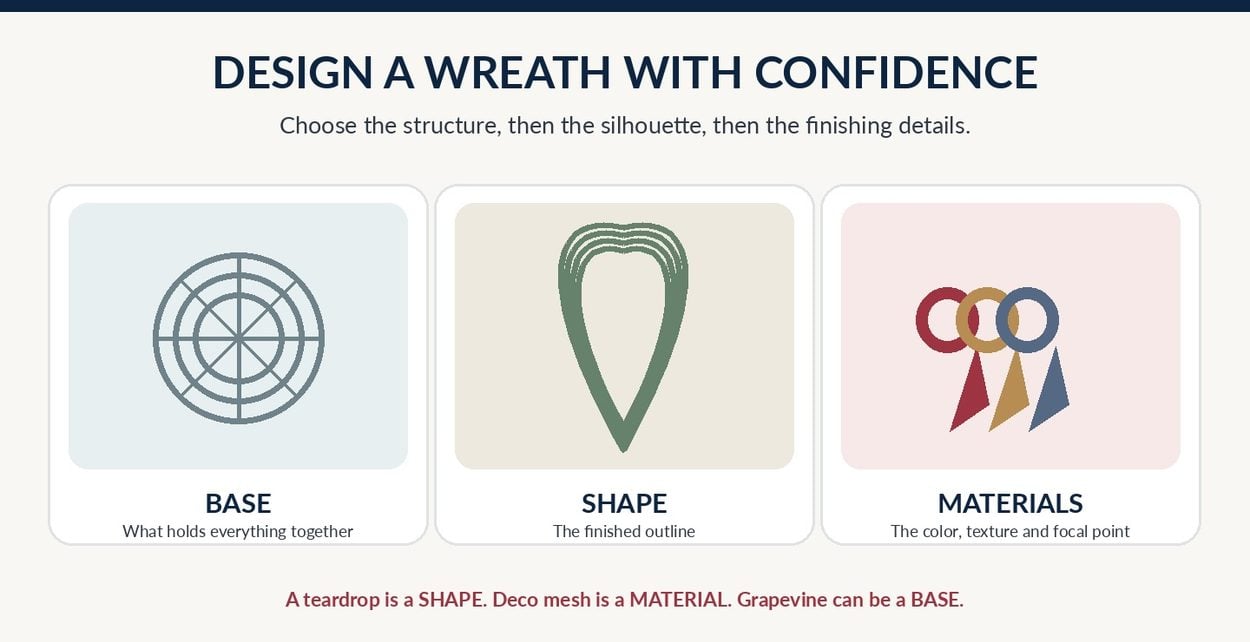
Table of Contents
Wreath Bases and Shapes: What’s the Difference?
Think of a wreath as a small design project with three layers. The base is the structure underneath. The shape is the outline you see after decorating. The materials supply color, texture, fullness, and personality.
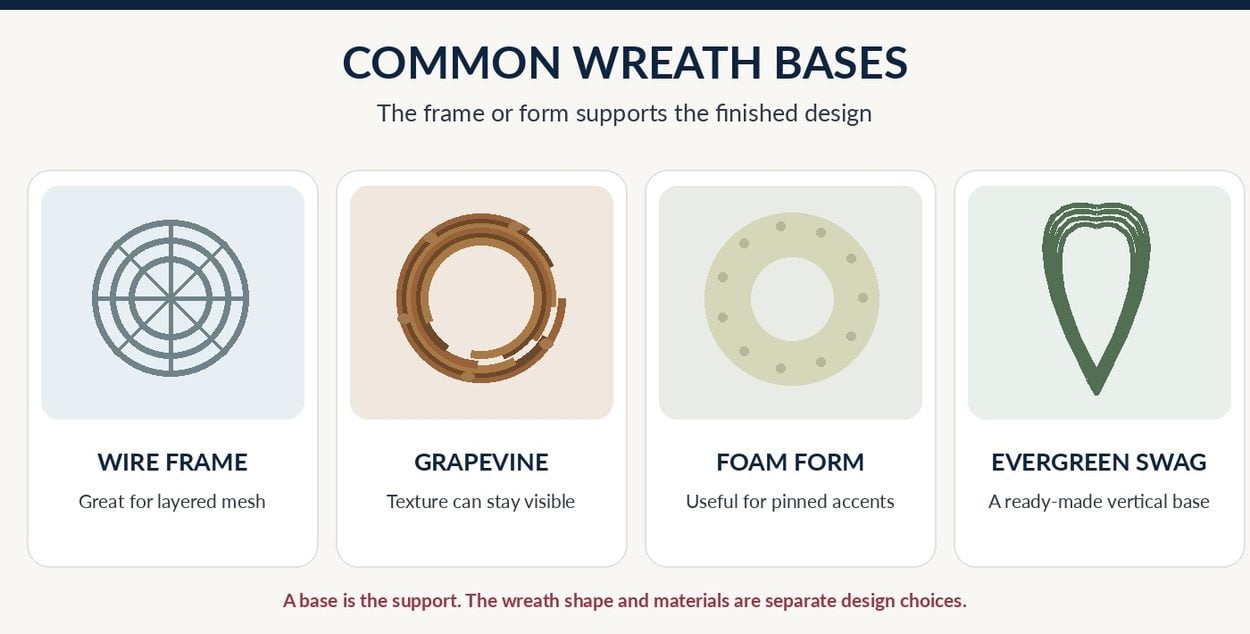
- Base: wire work frame, grapevine form, foam ring, straw form, or a wired greenery swag.
- Shape: round, oval, teardrop, crescent, or another planned silhouette.
- Materials: deco mesh, ribbon, flowers, greenery, picks, ornaments, and signs.
When comparing wreath bases and shapes, these categories can overlap in everyday product names. For example, a premade teardrop swag is already formed into its long pointed shape, so you are purchasing both a support and a silhouette. Still, asking those three separate questions makes planning much clearer.
1. Choose the Wreath Base That Supports Your Technique
The first decision in choosing wreath bases and shapes is practical. How will the pieces attach? How much weight must the form support? Will the bare base be visible when the wreath is finished? Good wreath bases and shapes work together, but the attachment method usually tells you where to begin.
Wire Frames and Work Forms
A metal wire frame is a versatile foundation for full designs. Wreath makers can attach mesh, ribbon clusters, greenery bundles, and signs with chenille stems, wire, or other secure ties. Work forms with attached ties are particularly convenient when you want regular placement points for mesh poufs and ribbon.
Choose wire when you want a bold, layered sports wreath where most of the frame will be hidden. A bare frame is not expected to look beautiful by itself; it is there to hold your materials. Explore the different options in our wreath frames and forms section.
Grapevine Wreath Forms
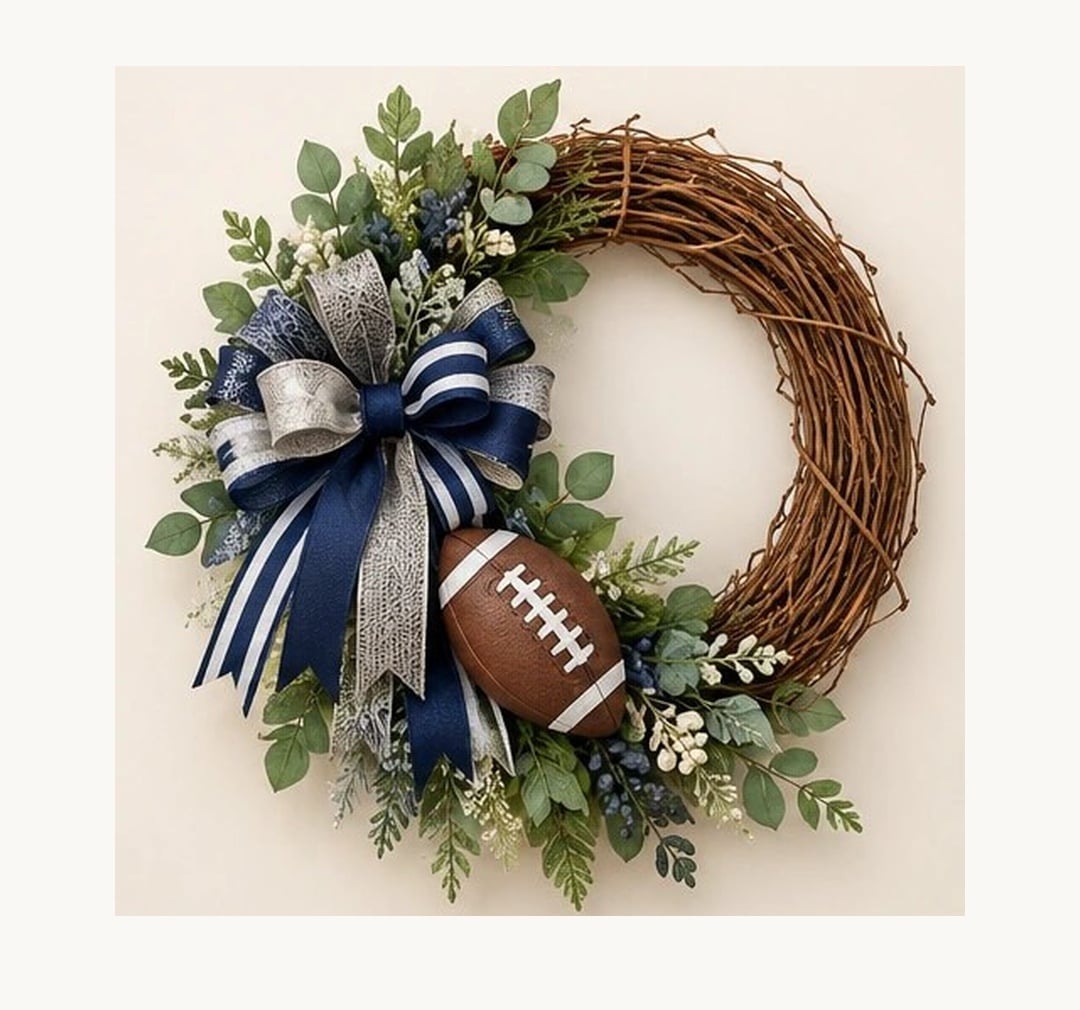
A grapevine form is made from intertwined woody vines. Unlike a bare metal frame, its texture can be part of the finished look. You can leave generous sections exposed and gather flowers, ribbons, and accents on one side rather than covering every inch.
Grapevine is lovely for a natural or slightly rustic design, including sports themes that use one team-color bow, a small football accent, and greenery. Pieces can be secured with floral wire, suitable ties, or adhesive methods appropriate to their weight. For a look at how the structure is woven, see the University of Florida IFAS Extension’s grapevine wreath tutorial.
Foam and Straw Forms
Foam rings and straw forms work well when your technique calls for pinning, wrapping, or inserting lightweight decorative components. They can support fabric-covered, yarn-wrapped, floral, or ornament-based wreaths, although fastening methods vary by material. Do not assume that heavy signs will stay put with a few pins; use a secure method designed for the weight.
These forms are useful when you want a smooth, continuous outline or a design with closely spaced embellishments. For outdoor displays, consider whether the form and attachments can tolerate moisture and heat.
Wired Evergreen and Premade Swag Bases
A premade evergreen swag or teardrop base comes with a branchlike structure and a long shape already established. You can add ribbon, florals, team colors, ornaments, and a focal accent while keeping the greenery visible. This is often a convenient starting point for vertical door decor or a mantel arrangement.
Evergreen swag bases appear in the wreath frame and swag selection at Sports Wreath Shop. If you prefer using fresh-cut greenery, Iowa State University Extension’s holiday wreath instructions show how branch bundles are attached to a wire wreath frame.
2. Choose the Finished Shape Before Decorating
After you choose a suitable base, picture the outline of the completed piece. Wreath bases and shapes influence placement: a broad round wreath distributes its focal points differently than a long narrow teardrop. The shape also determines how the arrangement fits between door panels, near hardware, or above furniture.
Round Wreaths: Familiar and Flexible
A round wreath has an established center and a familiar silhouette. It can be packed with mesh and ribbons, kept airy with exposed grapevine, or filled with greenery. This shape works especially well for large center signs, balanced side bows, and repeating ribbons around the circle.
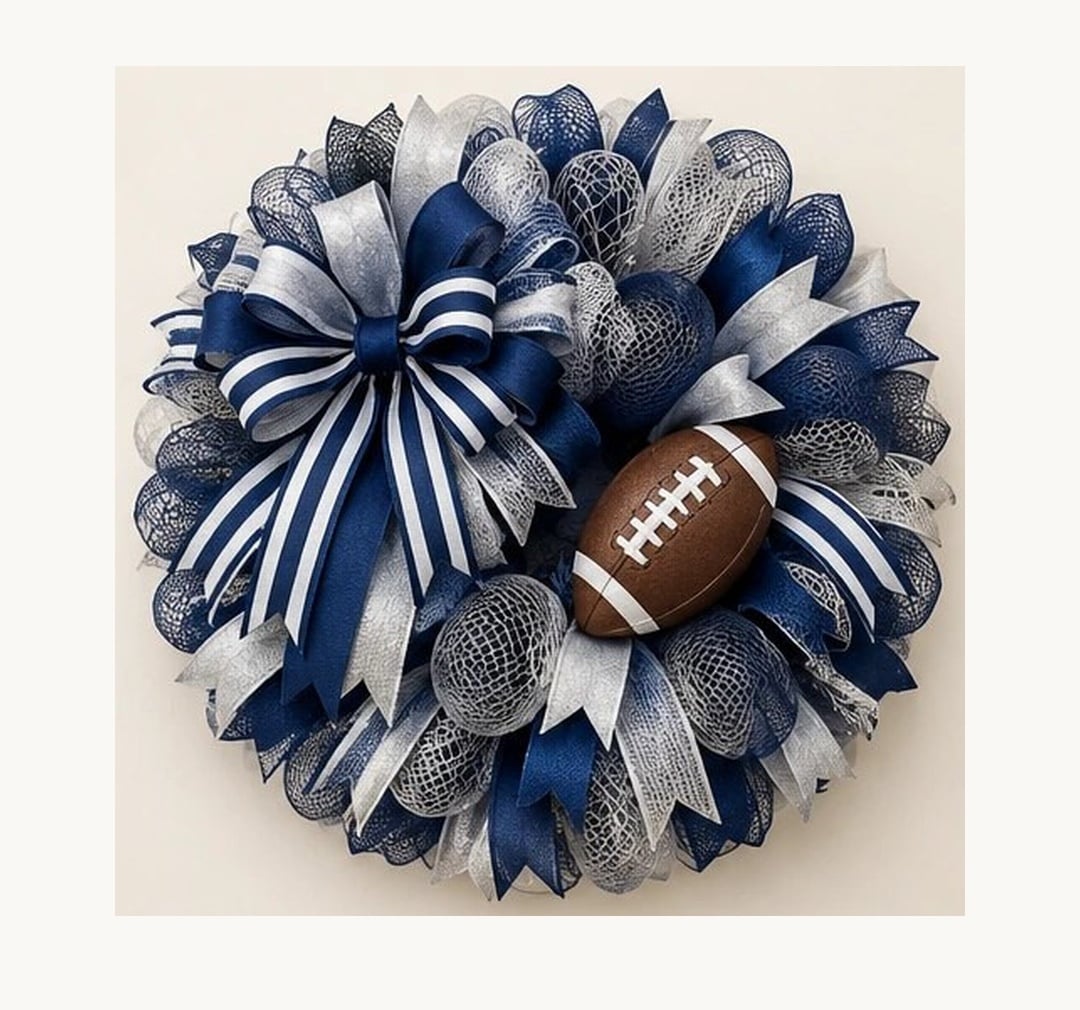
For example, start with a round wire form, add team-color mesh around the ring, then use one focal football or team sign. Follow with ribbon clusters and a few matching picks. The foundation and silhouette stay the same even when the materials change.
Oval Wreaths: A Softer Elongated Outline
An oval wreath offers more height than width without tapering dramatically. It can look especially graceful with greenery and ribbon running around the outline. Keep large bows and signs in proportion so the wreath does not become visually wider than intended.
Teardrop Wreaths and Swags: A Vertical Statement
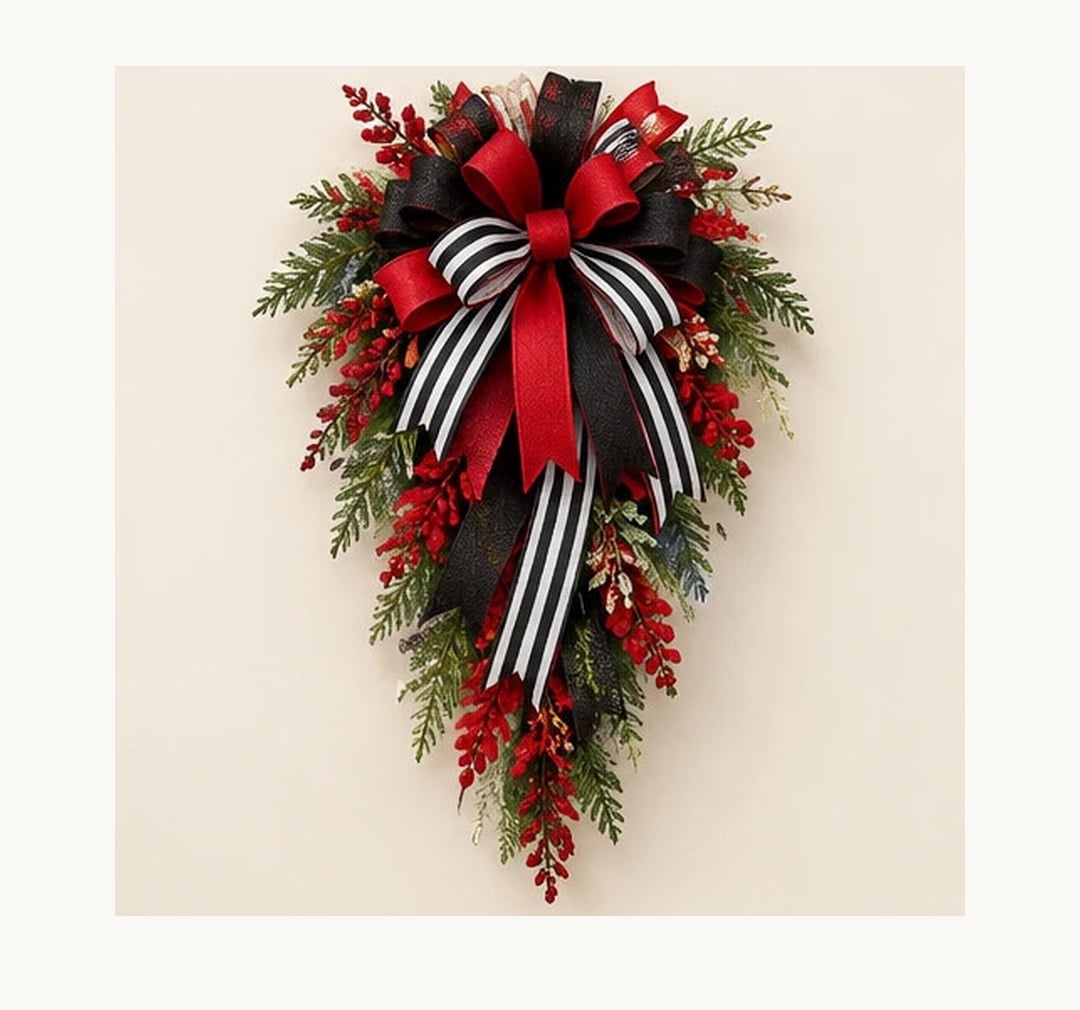
A teardrop has a defined upper portion and a longer descending point, so the design naturally leads the eye downward. Designers often position a bow near the top or upper third, then extend ribbon tails, sprays, and greenery along the lower point.
Use this outline when you want a tall accent for a door, narrow wall, or side panel. The underlying form might be a ready-made wired evergreen swag; the teardrop silhouette does not tell you which ribbon, floral, or mesh materials to use.
Crescent and Asymmetrical Arrangements
Some makers prefer a crescent-shaped wreath or a mostly open ring with decoration concentrated in one area. The open space is intentional. This approach often suits grapevine and greenery because you can let the underlying structure remain visible.
For a sports variation, use a smaller sign or attachment on the decorated side, add a modest bow, and carry one team color into the floral cluster. It makes a coordinated design without covering the entire base.
3. Choose Decorating Materials That Suit the Base
Materials create the personality of the wreath. They do not have to be the name of the finished shape. When you compare wreath bases and shapes before shopping, the supply list becomes easier to plan and you are less likely to buy embellishments that are too bulky or difficult to fasten.
Deco Mesh for Fullness and Color
Deco mesh is particularly effective when you want large loops, curls, or ruffles that make a round wreath look full. It also brings bright team-color combinations into a design without requiring dozens of ornaments. The volume comes from the mesh and your technique, not simply from the frame’s diameter.
Ribbon for Pattern, Direction, and Bows
Wired ribbon can add movement around a round wreath or create long lines on a teardrop swag. Choose one main pattern, one supporting pattern, and a solid or textured ribbon so the focal point stays clear. Large bows can transform a simple grapevine base just as effectively as they finish a full mesh wreath.
Florals, Greenery, Picks, and Signs
Floral stems soften a wreath; greenery creates texture and natural movement; picks extend beyond the main body; and a sign makes the theme immediately clear. For sports projects, start with one recognizable element, then let ribbon and team colors support it. Our wreath-making supplies section is organized around the materials you may want to combine.
4. See How the Same Base Can Support Different Designs
One of the most useful things about wreath bases and shapes is that they do not lock you into a single decorating style. A grapevine ring can become a rustic football wreath for fall, a floral welcome wreath for spring, or a ribbon-forward wreath for a small entryway.
The same principle applies to a round wire frame. A navy-and-silver football design might use deco mesh, wide striped ribbon, and a focal football ornament. A fall design could use orange mesh and checked ribbon. The base and shape may be identical; the materials change the appearance.
On the other hand, moving from a round wreath to a teardrop changes the composition even if you keep the same palette. Long sprays and ribbon tails become more important, and the top-to-bottom direction becomes part of the design.
5. Match the Wreath to the Place It Will Hang
Choosing wreath bases and shapes for an actual home means thinking about the display area before purchasing materials. Is your wreath going on an exterior door, a protected entryway, a wall in a fan room, or above a mantel? That choice affects the finished width, height, depth, and weight.
- Wide front door: a substantial round wreath can make an inviting centerpiece.
- Narrow space: a teardrop or vertical swag may use the height more effectively.
- Small interior wall: an airy grapevine arrangement may be more comfortable visually.
- Storm door clearance: select a shallow arrangement and check the full depth, including the bow and sign.
- Outdoor exposure: choose weather-appropriate materials and sturdy attachments, and avoid assuming every ribbon or natural base is waterproof.
Remember that the diameter printed on a frame is not the finished wreath measurement. Loops, bows, and sprays add width and depth. If size is your main question, our guide to choosing the right wreath frame size covers that decision in more detail.
Not sure which wreath base or shape is right for your next project? We’ve created a FREE two-page Wreath Base & Shape Selection Guide to make choosing easier!
6. Build a Sports Wreath with a Simple Planning Sequence
Here is a way to apply wreath bases and shapes without getting overwhelmed by every attractive ribbon or sign you see.
- Pick the base: a round wire work form for a full mesh wreath, or a grapevine form for a more open look.
- Confirm the outline: round for a centered statement; teardrop if you want a tall cascading design.
- Choose the materials: one dominant team color, one supporting color, coordinating ribbon, a focal sign or football accent, and a few finishing picks.
- Dry-fit the focal pieces: place the bow and sign on the undecorated form before attaching anything.
- Build in layers: add the main foundation material, then ribbons, sign, and smaller details.
- Hang and review: step back several feet before adding more volume. The display view is what counts.
For a deeper look at visual balance once the wreath is assembled, read How to Make a Full and Balanced Wreath. It is a useful next step after you have settled the structure and silhouette.
7. Common Wreath Planning Mistakes to Avoid
Even experienced crafters sometimes shop for the decorations first and decide how to attach them later. A little planning can prevent frustrating adjustments.
- Confusing a material with a shape. Buying deco mesh does not determine whether you are making a round wreath or a teardrop swag.
- Choosing a base that is difficult to attach to. Think about sign weight, ties, stems, and wire before committing.
- Ignoring finished depth. A wreath that fits the door’s width might still collide with a storm door.
- Covering an attractive base unnecessarily. If you chose grapevine for its texture, let some of the woven vines show.
- Making every element the focal point. Pick one lead element and use the other decorations to support it.
- Forgetting the hang test. A long spray can shift dramatically once the wreath is upright.
The best way to approach wreath bases and shapes is still the same: decide how the wreath will be supported, how it should look in silhouette, and which decorating supplies create the style you want.
Frequently Asked Questions About Wreath Bases and Shapes
Is a teardrop wreath the same thing as a grapevine wreath?
No. Teardrop describes the finished outline; grapevine describes a woven, woody base. Grapevine is usually used for round or oval forms, while premade teardrop swags often use a wired greenery structure.
Is deco mesh a wreath base?
Usually deco mesh is a decorating material attached to a supporting form, such as a wire wreath frame. The material creates fullness, but the frame or work form provides the underlying structure.
Which wreath base works well for beginners?
A round wire frame can be a manageable starting point for someone learning mesh or ribbon techniques. Grapevine can be a friendly option for a simpler design with a bow and floral cluster. Choose based on the technique you want to learn, not a universal ranking.
Can I make a sports wreath without deco mesh?
Yes. A grapevine ring, a premade greenery swag, or another suitable form can be decorated with team-color ribbon, a small sign, and sports accents. Deco mesh is one option, not a requirement.
What should I buy first: the wreath form or the decorations?
Start with the intended display location and finished shape, then choose a base that supports your preferred technique. Gather the largest focal pieces before buying many small embellishments so you can check scale and attachment needs.
Ready to Choose Your Next Design?
Once you understand wreath bases and shapes, you can mix styles with purpose rather than trying to follow one rigid formula. Choose a strong foundation, build a silhouette that fits your space, and let ribbon, mesh, greenery, signs, and ornaments express your theme.
Browse wreath frames and teardrop forms, ribbon for sports and seasonal wreaths, and new wreath-making supplies to begin planning your next project. Your best wreath starts with a structure that supports the design—not with a label that limits it.